

How to Choose the Right Propane Heater Size for Your Patio
Choosing the right propane patio heater size is basically about matching heat output (BTUs) to your patio’s size, layout, and how windy/cold it gets where you live. Get it right and you’ll stay comfortable without wasting fuel.
What “heater size” really means (BTUs)
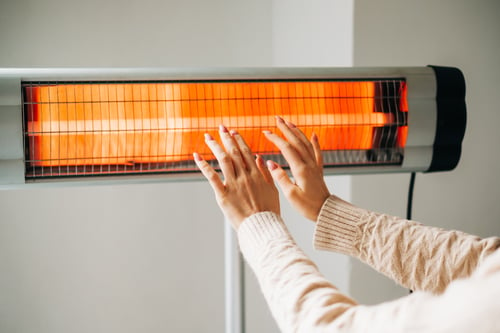
Most propane patio heaters are measured in BTUs (British Thermal Units). Higher BTUs usually mean:
-
More warmth
-
A larger coverage area
-
Higher propane use
Typical ranges you’ll see:
-
30,000–40,000 BTU: small patios, mild climates, semi-enclosed spaces
-
40,000–50,000 BTU: most standard patios and decks
-
50,000–60,000+ BTU: larger patios, colder climates, or breezy open areas
Step 1: Measure your patio area
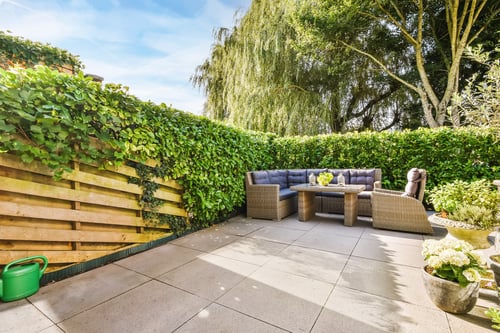
Start with the usable space where people actually sit.
-
Measure length × width in feet
-
Multiply to get square footage
Example: 12 ft × 16 ft = 192 sq ft
Quick BTU sizing guide (rule of thumb)
A simple starting point is:
$$ \text{BTUs needed} \approx \text{Patio sq ft} \times 100\text{–}150 $$
-
Use 100 for mild temps and sheltered patios
-
Use 150 for colder temps and windy/open patios
Example (192 sq ft):
-
Mild/sheltered: 192 × 100 = 19,200 BTU
-
Cold/windy: 192 × 150 = 28,800 BTU
That’s why many patios do well with a 40,000–50,000 BTU heater—because real patios lose heat to wind and open air.
Step 2: Factor in wind and openness (this matters a lot)
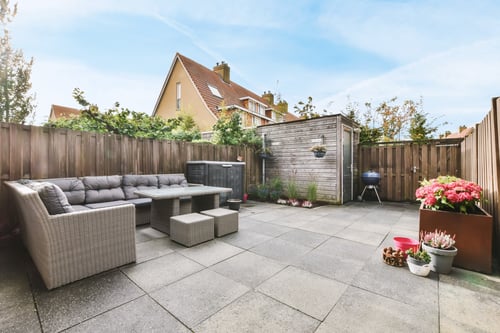
Outdoor heating is less about “warming the air” and more about radiant warmth and blocking heat loss.
-
Open patio + wind: you’ll need higher BTUs or multiple heaters
-
Covered patio (roof/pergola): heat holds better
-
Walls/curtains/screens: huge boost in comfort, so you can size down
If your patio is exposed, it’s often smarter to use two medium heaters instead of one giant heater. You’ll get more even warmth.
Step 3: Choose the right heater style for your layout
Different heater types “feel” different even at similar BTUs.
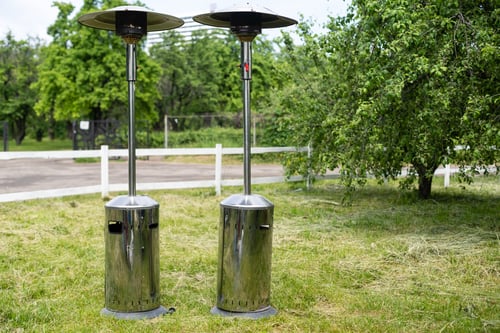
Freestanding mushroom (standard patio heater)
-
Common output: 40,000–48,000 BTU
-
Best for: open seating areas, flexible placement
-
Coverage: usually a circle around the heater
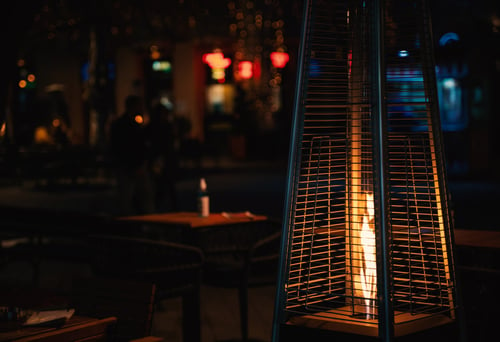
Pyramid flame heater
-
Common output: 36,000–42,000 BTU
-
Best for: vibe + moderate warmth
-
Coverage: a bit more “localized” warmth
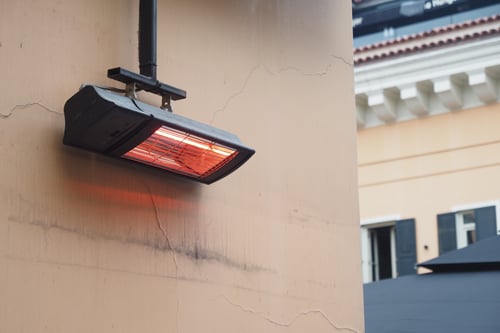
Wall-mounted propane heater
-
Common output: 20,000–40,000 BTU
-
Best for: tight patios, walkways, seating against a wall
-
Coverage: directional (aim it where people sit)
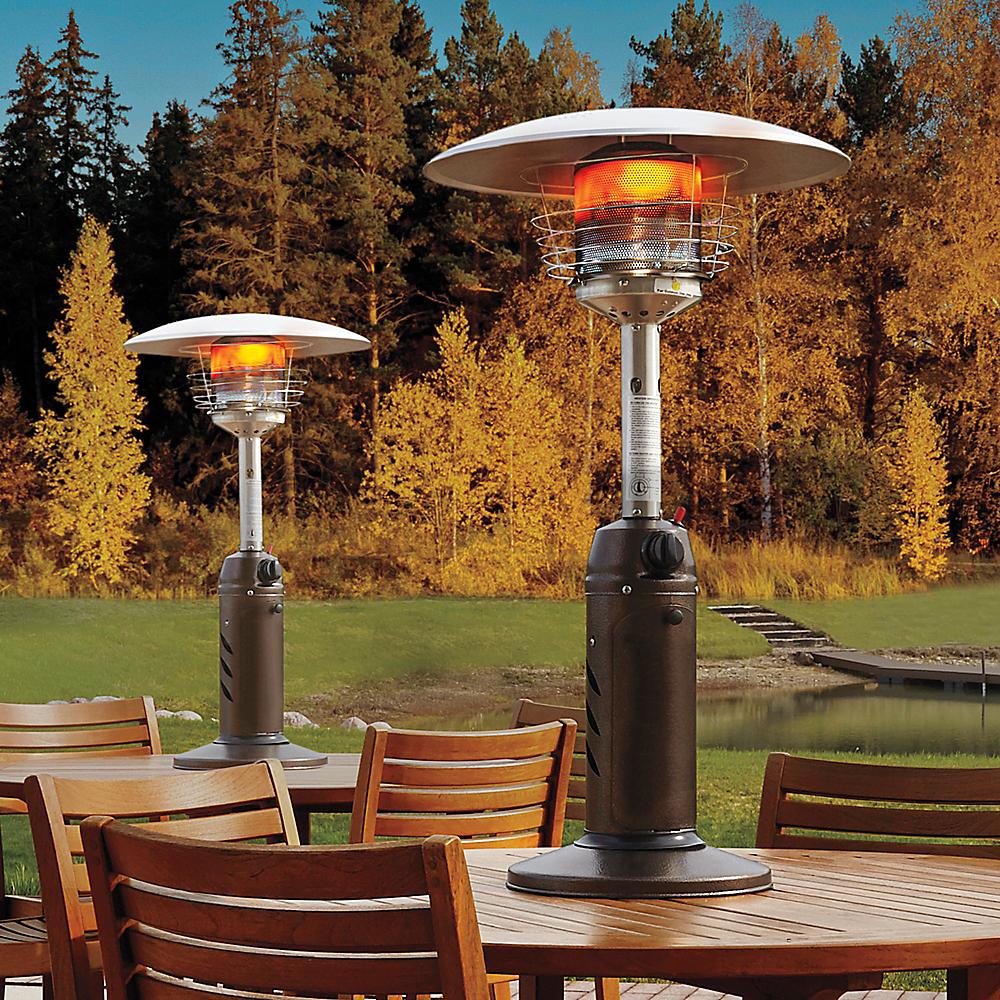
Tabletop propane heater
-
Common output: 10,000–15,000 BTU
-
Best for: small bistro sets, mild evenings
-
Coverage: close-range warmth
Step 4: Match BTUs to how you actually use the patio
Ask yourself:
-
Are you heating a dining table or a lounge area?
-
Do you want warmth for 2–4 people or a full group?
-
Are you out there in summer nights or late fall/winter?
Practical recommendations
-
Small bistro setup (under ~80 sq ft): 10,000–30,000 BTU (tabletop or small wall-mount)
-
Medium patio (80–200 sq ft): 40,000–50,000 BTU (classic freestanding)
-
Large patio (200–400 sq ft): 2 heaters at 40,000–50,000 BTU each, spaced out
-
Very large or very windy: consider multiple heaters + wind blocking (curtains/screens)
Step 5: Don’t forget safety clearances (and overhead coverage)
Sizing isn’t just comfort—it’s also safe placement.
-
Keep the heater away from furniture, umbrellas, and decor
-
Check the manufacturer’s clearance requirements (top and sides)
-
For covered patios, confirm the heater is approved for that setup
If you have a low ceiling, a wall-mounted heater may be safer than a tall freestanding model.
Step 6: Estimate propane usage (so you’re not surprised)
A standard propane tank is 20 lb. Many 40,000–48,000 BTU heaters run roughly:
-
8–10 hours on high
-
10–14+ hours on medium/low
If you entertain often, consider keeping a spare tank on hand.
Common sizing mistakes to avoid
-
Buying the biggest BTU “just in case” (it can waste fuel and still feel uneven)
-
Using one heater for a large patio (you’ll get hot spots and cold spots)
-
Ignoring wind (wind is the real enemy)
-
Placing the heater too far from seating (radiant heat works best nearby)
Quick checklist: pick your heater size in 60 seconds
-
Measure patio sq ft
-
Decide if it’s open/windy or sheltered/covered
-
Choose heater type (freestanding, wall-mounted, tabletop)
-
Pick BTUs using the 100–150 BTU per sq ft rule
-
If over ~200 sq ft, plan for two heaters
Final tip: comfort comes from placement, not just BTUs
Even the “perfect” BTU rating won’t feel great if the heater is placed too far away or the wind is blowing heat away. For most patios, 40,000–50,000 BTU is the sweet spot—but layout and wind protection make the biggest difference.